
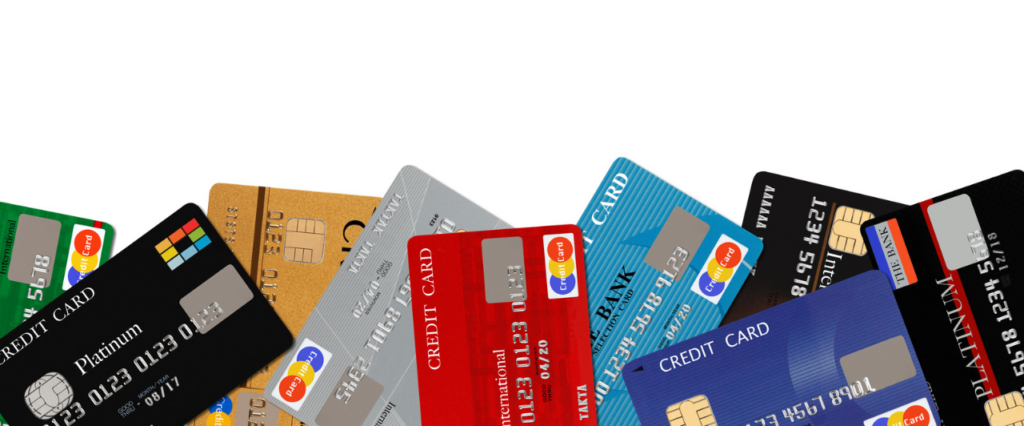
Credit cards get sold as a financial safety net, they’re a power tool when used carefully, however they can be extremely dangerous for your financial well-being. A credit card should be a convenience for people who have money, not a substitute for people who don’t. That distinction decides everything about whether a card helps you or hurts you.
If you have positive cash flow and control over your spending, cards are genuinely good. You can get rewards, travel points, cash back, purchase protection, fraud coverage and who knows what else. You get a short-term float, borrowing for a few weeks at no cost. You get a clean record of where your money went. However, cards don’t create money. They help people who already have it spend it more efficiently. That’s a real benefit. It’s just a much smaller one than the marketing suggests.
Now take the same card and give it to someone whose income doesn’t quite cover their life. It never starts dramatically. It starts with groceries, gas, a car repair you didn’t plan on. Month one, you carry a balance. Not a big one. Month two, interest shows up, so the balance is a little higher than what you spent. You make the minimum payment, which is mostly interest and barely dents the principal. Month six, you’re paying over 20% to float money that’s already gone. The card is no longer covering a gap. It is the gap.
That’s the part people miss. The card didn’t solve a cash flow problem. It converted a cash flow problem into a debt problem, and debt problems are harder to get rid of. It feels like relief for about ninety days. Then it’s quicksand.
This is the myth I’d most like to solve. Plenty of people operate as if credit fills in for income. It doesn’t. Credit is someone else’s money, loaned to you, at a price. When you use it for basic living expenses, you’re borrowing from your future self at a brutal rate. And your future self has no idea whether they’ll be able to pay it back.
I’m not anti-debt. I’ve spent thirty plus years in lending putting clients in debt and I’d be a hypocrite. Debt is a tool, and the tool is either building something or draining something. Two questions tell you which. Is it secured by an appreciating asset? A mortgage is attached to a house; the house generally gains value over decades while the loan balance shrinks. Credit card debt is attached to nothing. What’s the rate? Mortgage money usually is in single digits. Card money is routinely north of 20%. That gap isn’t a detail. It’s the entire difference between a liability that works for you and one that eats at you.1
On a mortgage, you’re buying equity in something that tends to appreciate, and inflation quietly shrinks the real cost of your fixed payment year after year. Thirty years in, that monthly number is nothing. On a card at 22%, you’re buying nothing new. The interest compounds against you instead of for you. Three decades of that doesn’t produce an asset. It produces a whole lot of interest paid.
If you’re using cards to stay afloat right now, the goal isn’t shame. It’s getting your cash flow back. Track the actual number, not a guess. Track what comes in and what goes out for three full months. Most people are surprised, you cannot fix a leak you haven’t measured.
Build a small buffer first, even before you attack the debt. This sounds backwards. It isn’t. Without any cushion, the next car repair goes straight back on the card and you’re running in place. It doesn’t need to be $10,000. Even $500 breaks the reflex of an emergency equal’s swipe. Start saving something, however small. Twenty-five dollars a month won’t change your balance sheet. It will change your habits, and the habit is the part that lasts.
Then look at restructuring. If you have equity in your home or access to lower-rate credit, moving 22% debt to single-digit debt could free up monthly cash flow. That’s the “borrow smart, repay smart” idea in practice, and for the right person it works well. But be clear-eyed about it. You’re converting unsecured debt into debt secured by your house. The card company could hurt your credit. A mortgage lender can eventually take the property. That’s a serious trade, and it only makes sense if the spending patterns that created the balance have stopped.
I’ve seen people consolidate, feel the relief, and run the cards right back up within a year. Now they have both, consolidation is a reset, not a solution, and it works if used properly.
Credit isn’t the enemy. Credit used as a substitute for income is. When you’re financially solid, a card is a convenience. It smooths purchases, earns a little back, and costs you nothing because you never carry a balance. When you’re in survival mode, the credit card is most likely the most expensive money you can get, and it’s aimed at keeping the spending pattern alive,
There’s no shame in needing help. But the help usually isn’t in an envelope with a 23% APR on the back. It’s in understanding your cash flow, structuring your liabilities on purpose, and borrowing with a plan instead of out of pressure. A credit card is a convenience for people who have money. It was never designed to be an antidote for people who don’t. If you want to talk through possible solutions, reach out.2
1. OriginPoint does not provide financial planning services. The consumer should always consult a financial professional for information regarding financial decisions in their particular situation 2. OriginPoint does not provide credit counseling or credit repair services.
Applicant subject to credit and underwriting approval. Not all applicants will be approved for financing. Receipt of application does not represent an approval for financing or interest rate guarantee. Refinancing your mortgage may increase costs over the term of your loan. Restrictions may apply.
All information provided in this publication is for informational and educational purposes only, and in no way is any of the content contained herein to be construed as financial, investment, or legal advice or instruction. OriginPoint does not guarantee the quality, accuracy, completeness or timelines of the information in this publication. While efforts are made to verify the information provided, the information should not be assumed to be error-free. Some information in the publication may have been provided by third parties and has not necessarily been verified by OriginPoint. OriginPoint its affiliates and subsidiaries do not assume any liability for the information contained herein, be it direct, indirect, consequential, special, or exemplary, or other damages whatsoever and howsoever caused, arising out of or in connection with the use of this publication or in reliance on the information, including any personal or pecuniary loss, whether the action is in contract, tort (including negligence) or other tortious action.
Operating in the state of California as OriginPoint Mortgage LLC in lieu of the legal name OriginPoint LLC.
OriginPoint LLC; NMLS #2185899; OriginPoint.com; 1800 W Larchmont Ave Suite 305, Chicago, IL 60613; 855-997-6468. For licensing information visit nmlsconsumeraccess.org. Equal Housing Lender. OriginPoint.com Conditions may apply. AZ: OriginPoint LLC – 15333 North Pima Road, Suite 305, Office 337, Scottsdale, AZ 85260, Mortgage Banker License #1038328• CA: Licensed by the Department of Financial Protection and Innovation (DFPI) under the California Residential Mortgage Lending Act RMLA #41DBO-150076 • CO: Regulated by the Division of Real Estate • OR: Licensed and Regulated by the Department of Consumer and Business Services • WA: Consumer Loan Company License CL-366423
Let’s Connect!
Have questions or ready to take the next step in your home financing journey? I’m here to help.
Call: (858) 526-3037
Email: carl.spiteri@originpoint.com
Carl Spiteri
Producing Partnership Branch Manager
NMLS ID: 286890
Licensed in: AZ, CA, CO, FL, ID, MI, MT, NV, OR, SC, TN, TX, WA, WY